The sugar problem in everyday eating is not primarily a confectionery problem. It is a problem of the ordinary — the breakfast drink, the lunchtime sauce, the evening snack that appears on no list of indulgences because it does not feel like one.
What the Label Shows and What It Does Not Surface
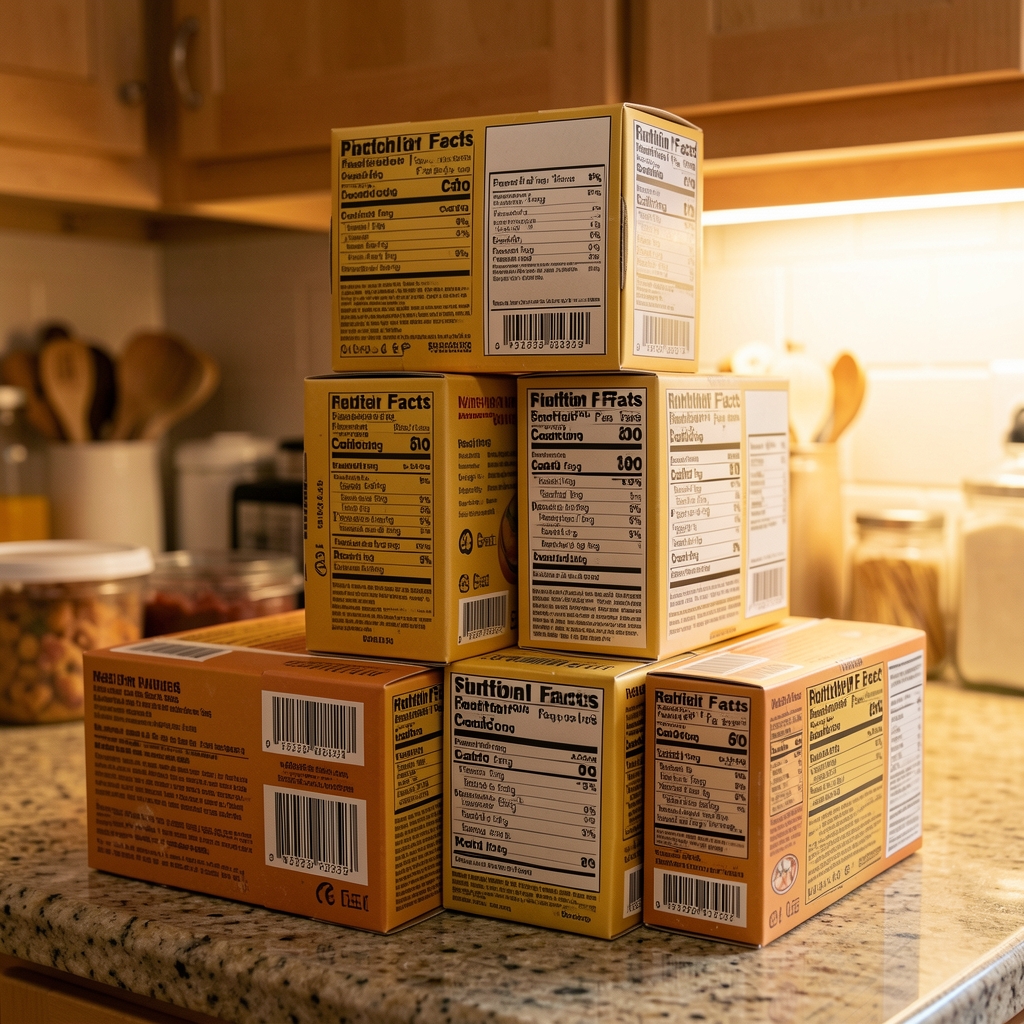
Nutritional labelling on packaged food in the United Kingdom has improved considerably in design clarity over the past decade. The traffic-light system, the per-100g figures, and the percentage-of-reference-intake values provide more information than most food packaging offered twenty years ago. The challenge is not the absence of information but the particular effort required to act on it at the moment of consumption — a moment that is typically quick, often distracted, and rarely the kind of occasion that invites close reading.
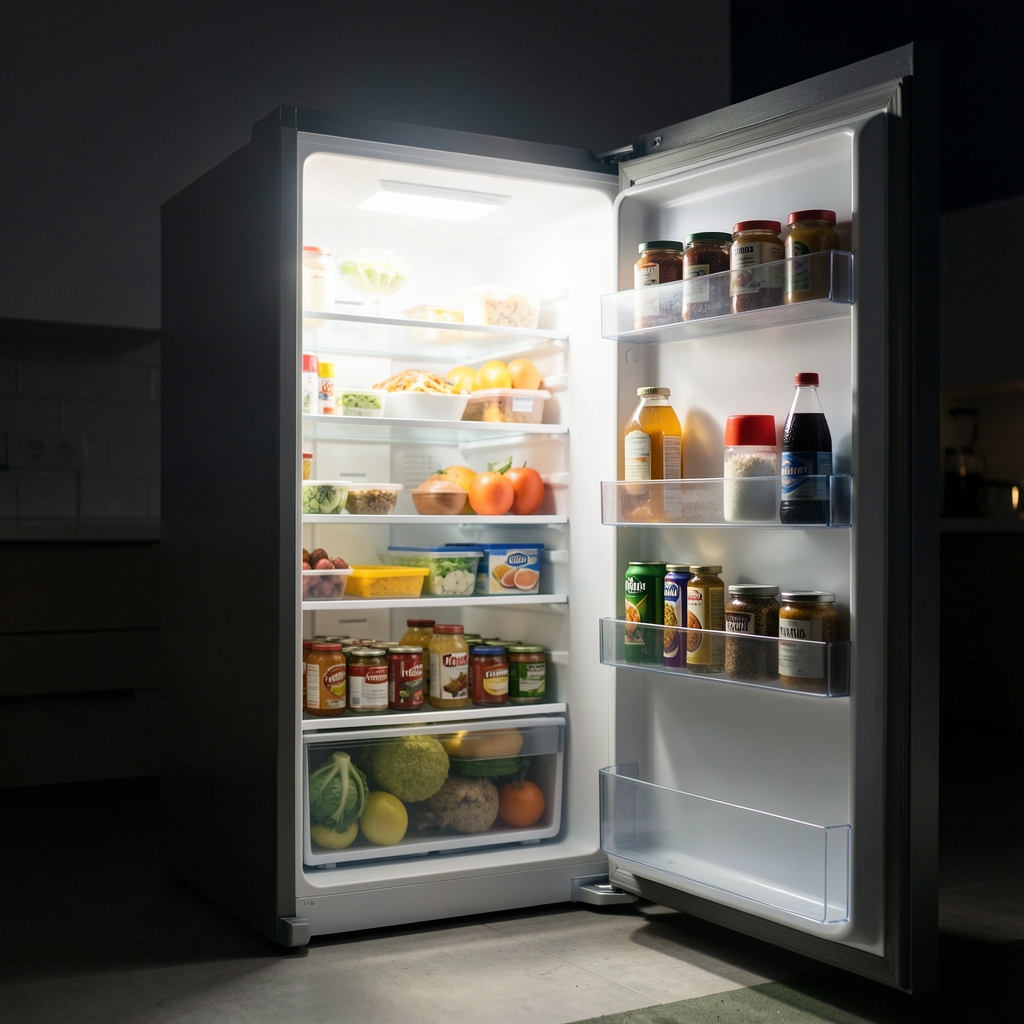
Hidden sugars in everyday food accumulate not in obvious sweet items but in the categories that most people do not mentally file under sugar. Pasta sauces, bread, flavoured yoghurts, breakfast cereals marketed as low-fat, pre-made soups, ketchup, commercial salad dressings — all of these carry sugar loads that can, individually, exceed the content of a small biscuit, and collectively constitute a substantial portion of the day's total sugar intake without a single deliberate sweet choice having been made.
The sugar concealed in these items functions partly as a flavour tool and partly as a structural or preservation ingredient, which means it is present in quantities determined by the food manufacturer rather than the consumer. Gradual dietary improvement is correspondingly difficult when so much of the intake is baked in at the point of production.
Liquid Calories and the Drink That Does Not Register
Liquid calories awareness — the degree to which people account for the caloric content of drinks — is persistently low across nearly all demographic groups studied. This is not a knowledge gap in the usual sense: many people are aware, in the abstract, that drinks can contain calories. The gap is between abstract awareness and moment-of-consumption integration, and it is a wide one.
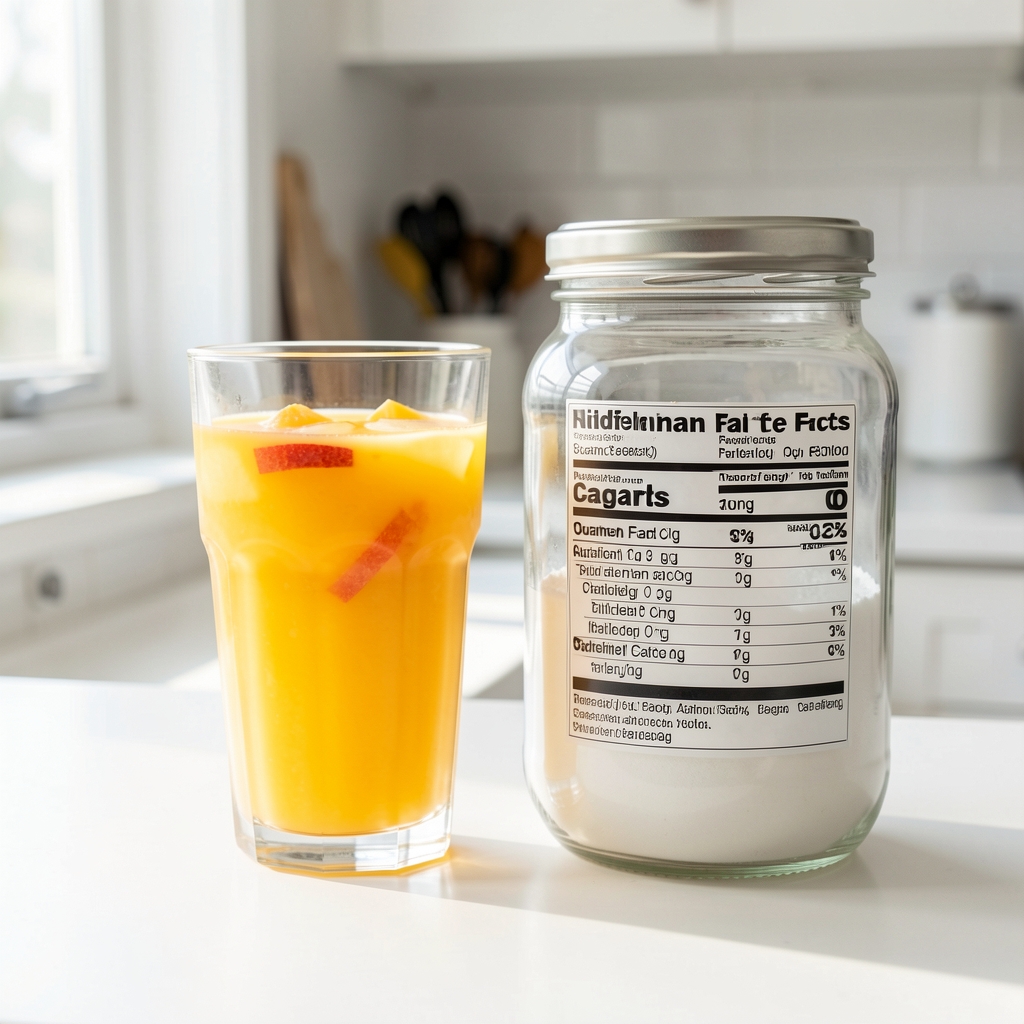
A 330ml glass of fresh orange juice contains roughly 120-150 calories and between 22 and 30 grams of sugar — comparable to a generous serving of cake, but routinely consumed as a health-neutral accompaniment to breakfast. Commercial smoothies, sports drinks, flavoured waters, iced coffees, and flavoured teas frequently carry sugar loads in excess of what any reasonable assessment would designate as a minor addition to the day. The absence of chewing, texture, and the social ritual of eating means these items do not trigger the same evaluative response that food typically generates.
Refined carbohydrates in food operate in a related way. White bread, white rice, standard pasta, and crackers are not commonly described as sweet by those consuming them. Their sugar effect is metabolic rather than perceptual — a rapid conversion to glucose that arrives faster than the body's ability to manage it with consistent metabolic efficiency. Portion distortion is particularly relevant here: a standard portion of pasta as depicted on food packaging rarely corresponds to the portion served at home.
The Sugar Vocabulary Problem
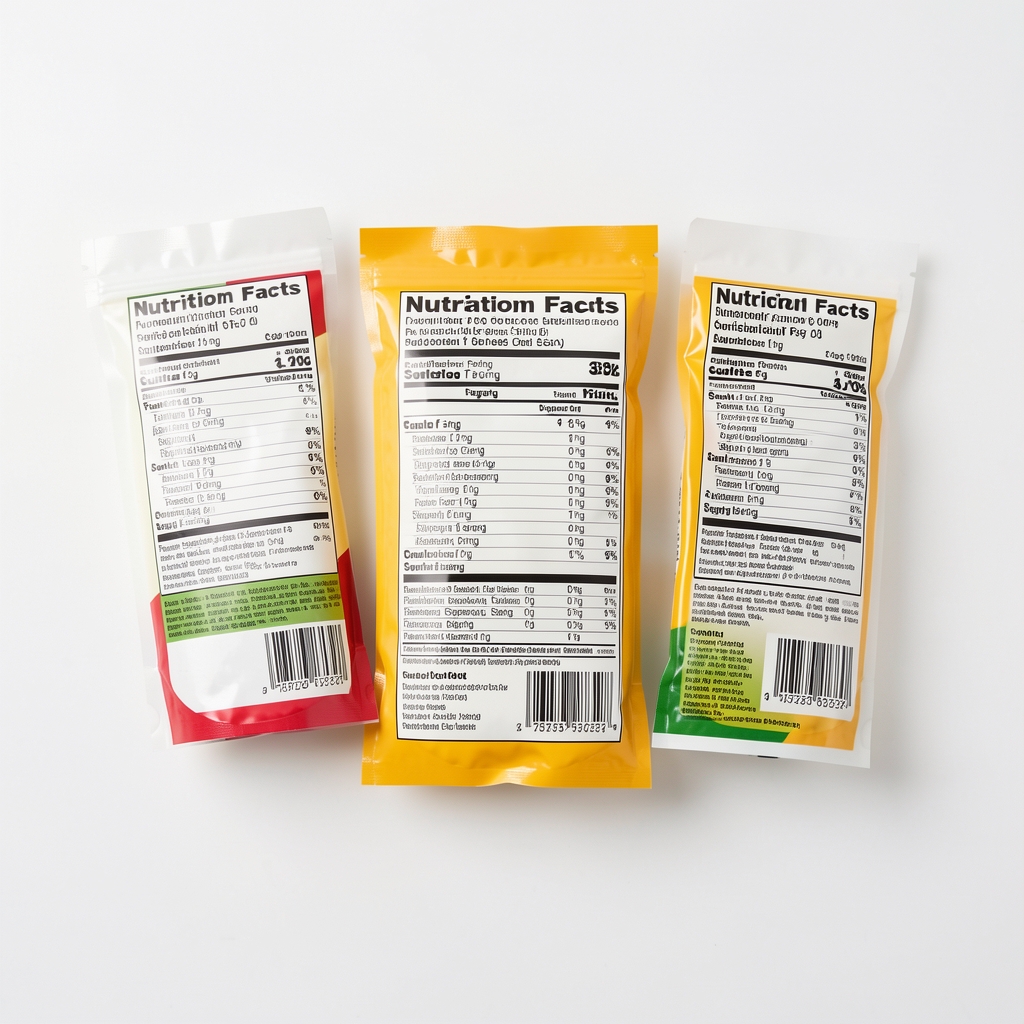
A consistent structural obstacle to reducing hidden sugar intake is the breadth of terminology under which sugar appears on ingredient lists. Sucrose, fructose, glucose, dextrose, maltose, corn syrup, fruit juice concentrate, agave nectar, honey, molasses, treacle, rice malt syrup — all of these are sugars in metabolic terms, and all of them appear, sometimes multiple times, in the ingredient lists of ordinary packaged foods. A product listing three or four of these in its first six ingredients may carry a sugar content that the consumer would not expect.
This is not a disclosure failure in the regulatory sense: the information is present. It is a comprehension and attention challenge. Reading ingredient lists in the way nutritionists advise — with full attention, across every purchased item — requires a sustained cognitive effort that is at odds with the conditions under which most grocery shopping occurs. Convenience food reliance and hidden sugar intake are not independent phenomena; they are bound together by the conditions of everyday food procurement.
The practical implication is not that consumers are responsible for navigating an unreasonable labelling landscape unaided. It is that awareness of category-level patterns — knowing that sauces, drinks, and breakfast items frequently carry significant sugar loads even when they are not marketed as sweet — is more tractable as a starting point than item-by-item scrutiny.
What Reduction Tends to Involve
Research on gradual dietary improvement and sugar intake finds that the most durable reductions occur through substitution rather than elimination — and specifically through substitution at the category level. Replacing a sugared breakfast cereal with an unsweetened one, switching from flavoured yoghurt to plain, replacing a fruit juice with water or unsweetened tea — each of these represents a relatively minor contextual adjustment that, maintained, has an accumulated effect on daily intake that exceeds what most deliberate restriction achieves.
The cooking at home dynamic is relevant here: home preparation makes ingredient selection visible in a way that packaged food does not. A pasta sauce made from tomatoes, olive oil, and herbs at home carries a different sugar profile than the same product bought in a jar. This is not a practical argument against convenience; it is an observation about where the differential lies.
Articles published on Elano Quarterly are editorial in nature and reflect the writers' observations on everyday wellness practices. The content is not intended as professional advice, nor as guidance for the management of any specific condition. Readers with specific concerns about their daily routines are encouraged to speak with a qualified wellness professional.
- 01 Hidden sugars accumulate primarily in savoury, ambient, and breakfast categories rather than in obvious confectionery.
- 02 Liquid calories from drinks are consistently under-monitored and do not generate the same satiety or evaluative response as equivalent solid intake.
- 03 Sugar vocabulary on ingredient lists is broad enough to require specific literacy that most consumers have not been trained to apply.
- 04 Category-level awareness (sauces, drinks, breakfast items) is a more tractable starting point for reduction than item-by-item scrutiny.